Social Support

“One of the best ways to prevent burnout is to build up your social-support systems at home and work.” - Consortium for Health and Military Performance
The military understands the price paid for continuous existence in high pressure situations. The #1 tool to prevent burnout is social support. You know, a hug from a friend. Hanging out at Grandma’s. Meeting your buddies at the bar to watch the game. ALL THE STUFF THAT IS TRICKY OR DOWNRIGHT DANGEROUS TO DO RIGHT NOW. My friend, Janie, understands this. If our dog is up all night (a too-frequent occurrence) or I’m on the couch fighting depression or chronic pain, she drops off food on the doorstep. She is part of my social support network, but let’s be honest, we are ALL frayed and it is not easy to be there for one another.

Before Omicron, we were venturing back out, giddy to see one another and plan outings. A concert! A play! And oh-my-gosh a movie in a theater. Omicron has scrambled that for some, less for others.
For a lot of folks, Omicron feels like a personal problem. If you’re vaxxed, you might get it, but you’ll probably survive. If you aren’t, well, that’s your problem. Let’s let it rip and build natural immunity. Which would be fine, if it didn’t disrupt so many systems and businesses and possibly increase the chances for more mutations and make our vulnerable population feel completely expendable.
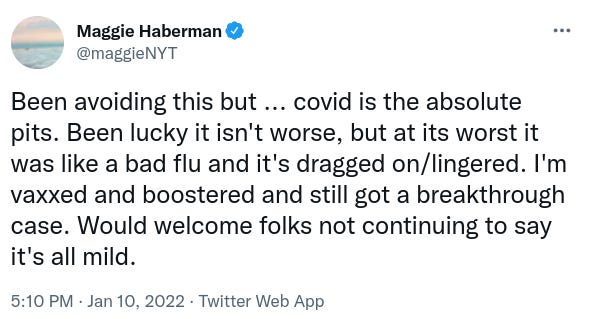
Importantly, although Omicron is “milder” than previous variants, it’s not exactly “mild.” Friends are reporting that it is like the worst flu they’ve ever had, that they have aches, fever, are coughing up phlegm, have the worst headache, and are fatigued. They aren’t dying, but they feel like crap.
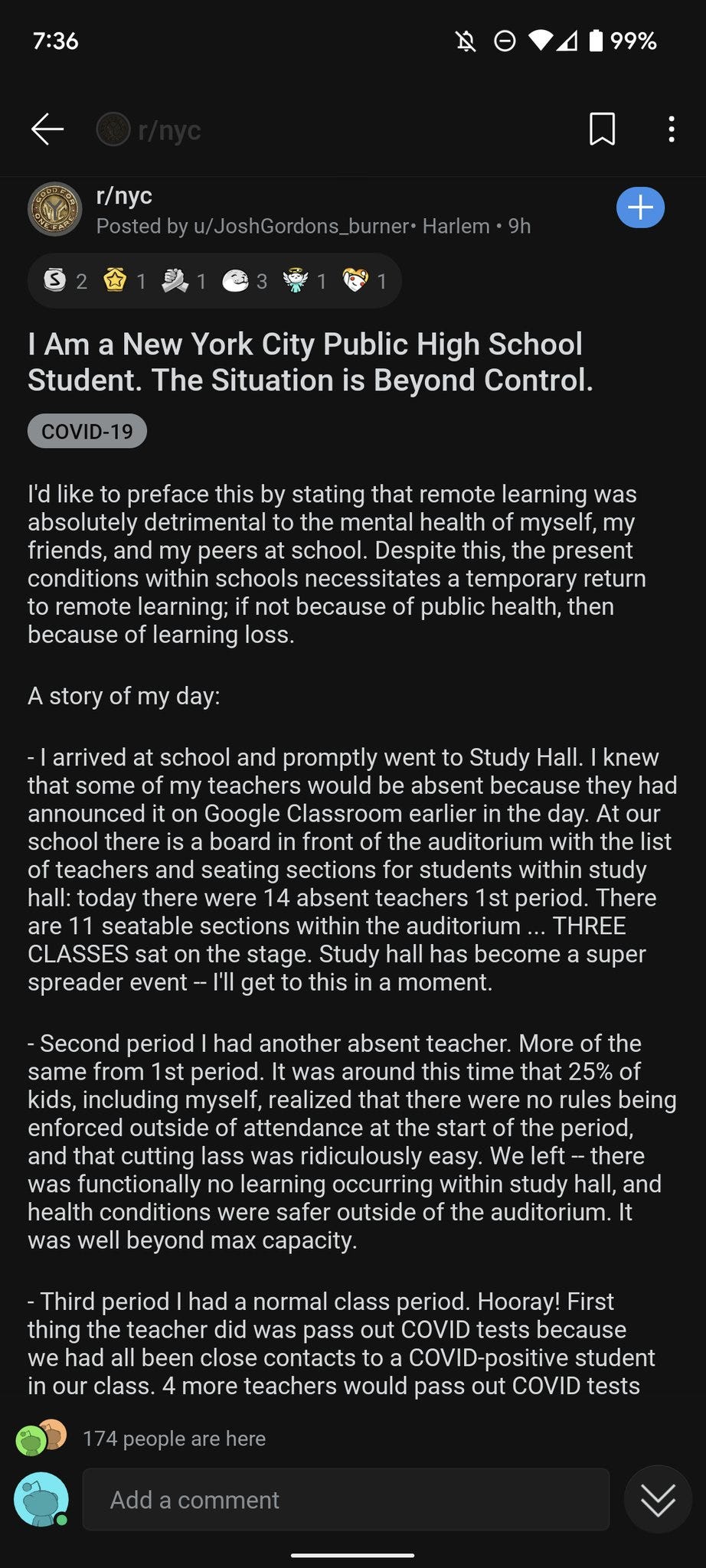
So what happens if 25% of the country comes down with a very bad cold or flu all at once? Systems fail. Hospitals were already under-staffed and now, they have lots of staff out with Covid. Schools (also chronically under-staffed) have multiple teachers out with Covid and no substitutes. In some school systems, administrative staff are teaching (babysitting), and students are watching movies in the gym.
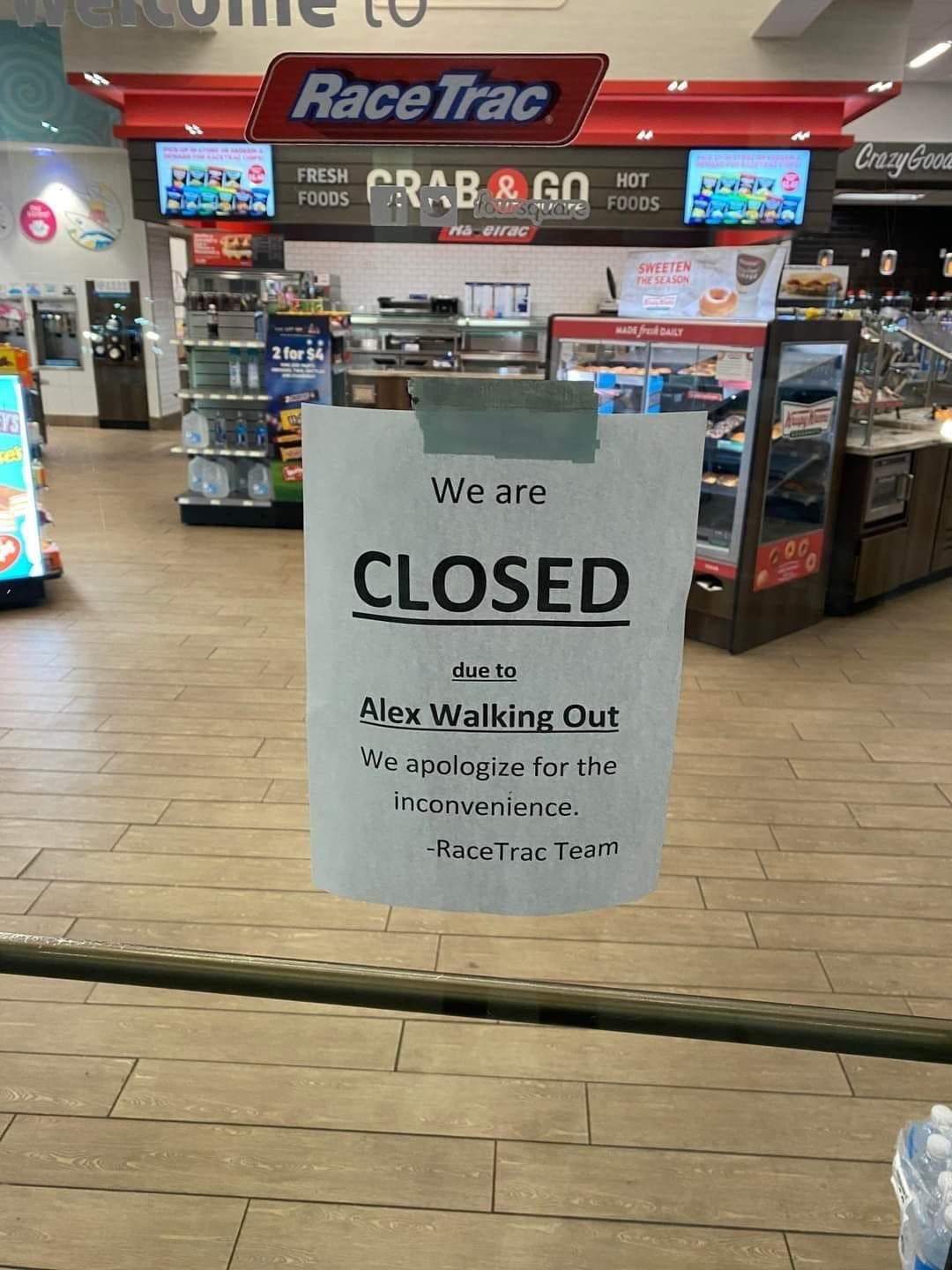
My pharmacy closed its drive-thru due to staffing shortages. I’ve had UPS packages delayed or lost. Our recycling hasn’t been picked up in over a week. Random items are in shortage at the grocery. All due to Covid shortages.
And it’s not like a cold where people can stuff their pockets with tissues and antihistamines and power through. (Which, in retrospect, was dumb but CAPITALISM.) People are too sick to go to work, full stop. And so the things we were trying to avoid - lockdowns/business closures - happen anyhow, just in a more chaotic, unpredictable fashion.
The good news? Experts believe this Omicron wave will flame out quickly, maybe even as soon as the end of the month. The bad news? We all know we can’t vaccinate our way out of this pandemic. We know our underlying systems and infrastructure don’t just have cracks: they have canyons.
We need to pay teachers more and double the number of teachers. (Yes, I said “double.” One teacher for 25 students is bad for education and unsustainable in situations like this.) We need to recruit a LOT more healthcare workers. We need paid leave for folks who are sick and we need enough staff that the whole system doesn’t break down when people are out. We need to marshal our resources to prioritize clean air the way we once did with water. We need N95 masks in every mailbox and testing that is free and available everywhere.
We need to stop being so selfish and look at how our individual actions impact our neighbors and our community. I don’t expect the United States to pivot from individualism to collectivism any time soon, but having a more collectivist spirit will enable us all to get through this easier. It’s social support on a larger scale. It’s a million Janies asking healthcare workers what they need, checking in on our teachers, offering kindness, support, and a well-baked frittata. It’s a softening that will enable us to harden our infrastructure.